 Home
Home

News Articles
Regaining Social Connection Through Therapy
Gary G.’s journey with Rehab Without Walls began after he experienced a syncopal fall while on duty at work that resulted in a traumatic brain injury. Following the injury, he had little memory of the events leading up to the fall, and his early recovery was marked by low motivation, significant fatigue, and difficulty completing even basic daily tasks.
Before his injury, Gary was always on the move. He was hardworking, social, and deeply rooted in his South Philly community—spending time with friends, enjoying good food or a cigar, working as a police officer at the University of Pennsylvania, and actively involved in his home and family life.
Physically, Gary experienced frequent dizziness when standing, difficulty navigating stairs, impaired balance, and reduced endurance. Emotionally, he withdrew from social interactions and no longer felt like himself. His wife, Joanne, recalls how anxious and overwhelming those early days were, providing close supervision and hands-on assistance for basic activities like nighttime bathroom trips, showering, and stair negotiation after Gary experienced a fall at home shortly after discharge.
While still in inpatient rehab, one of Gary’s therapists recommended Rehab Without Walls, citing the program’s intensity, individualized approach, and strong focus on returning patients safely into their communities. Gary and Joanne decided to move forward, hopeful, but uncertain.
From the start, Gary worked closely with our transdisciplinary team that included physical therapy (PT), occupational therapy (OT), and a registered dietitian (RD). Although he was a willing participant, Gary initially had low energy and required frequent breaks. He often spent hours sitting on the couch between exercises—so much so that he developed a “spot” that became a running joke during therapy sessions. Friends, family, and coworkers frequently reached out to check on him, but Gary rarely responded, explaining that he didn’t feel up to talking or retelling a story he couldn’t remember himself.
Physical Therapy for Social Connection
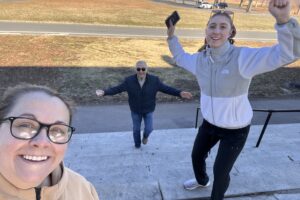
Physical therapy focused on addressing Gary’s dizziness, balance deficits, and safety concerns through vestibular therapy, neuromuscular re-education, coordination training, and static and dynamic balance activities. At first, Gary was resistant and unsure of the process. Over time, however, he began to enjoy the challenge, especially as he noticed meaningful improvements. Walking became easier. He could stand up quickly from a chair without dizziness. Showering felt safer. Within weeks, Gary had his “strut” back.
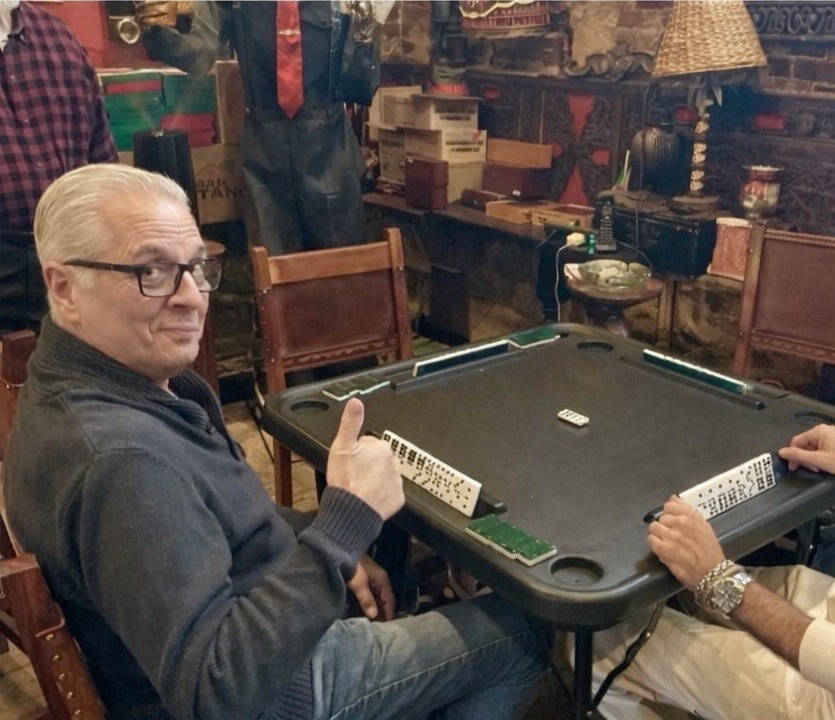
A major turning point came during Gary’s first week of therapy with his initial community outing. With encouragement from Joanne and his OT, Gary visited his local cigar lounge, an important part of his pre-injury routine where he once spent hours socializing, playing dominoes, and joking with friends.
Being back in that familiar environment sparked something in him. His personality re-emerged as he reconnected with more than a dozen friends who were thrilled to see him. Afterward, Gary shared that he was genuinely glad he went. From that moment on, he became more open about sharing his story and began actively rebuilding his social life.
Co-Treatment for a Healthier Lifestyle
Occupational therapy sessions continued to emphasize community reintegration, cognitive and attention-based activities, endurance, balance, and healthcare management strategies, an entirely new experience for Gary, who had minimal medical needs prior to his injury. Tools such as BlazePods were incorporated to challenge his attention, reaction time, and balance simultaneously, with measurable improvements seen throughout treatment.
Gary also participated in OT/RD co-treatment sessions focused on nutrition and functional meal preparation. Together, they practiced preparing simple, low-sodium, high-protein meals in his home kitchen, working on label reading, following dietary recommendations, and safely completing tasks. Education emphasized the importance of protein intake to rebuild muscle mass and sodium management due to his history of high blood pressure. Therapy concluded with a co-treatment session preparing an easy microwave meal of rice, tuna, and vegetables, reinforcing both independence and carryover of skills.
Gary’s Outcomes
With consistent effort across all therapies, Gary made rapid improvements in both physical and cognitive endurance. He was able to spend longer periods out in the community, taking walks through his neighborhood and FDR Park, visiting stores, restaurants, the pharmacy, and even returning to his police station headquarters to re-engage with his work environment. Of course, regular trips back to the cigar lounge and competitive domino matches became a meaningful way to challenge both his cognitive skills and social confidence.
One of Gary’s most meaningful milestones came when he took his grandchildren to Storybook Land, walking all day without difficulty and fully enjoying the experience with his family. As Gary looks ahead, his goals include returning to driving, going back to work, and continuing to regain independence. This journey has also given him a renewed perspective.
“I don’t let the little things bother me anymore,” Gary shared, “I realize how delicate life is and how much we take for granted. I’m thankful for every day.”
When asked to rate his experience, Gary didn’t hesitate, “20 out of 10,” he said. He went on to say he absolutely would recommend Rehab Without Walls to others navigating recovery after and injury, stating, “Rehab Without Walls helped me out immensely.”