 Home
Home

News Articles
Improving Dementia and Neuropathy through Therapy
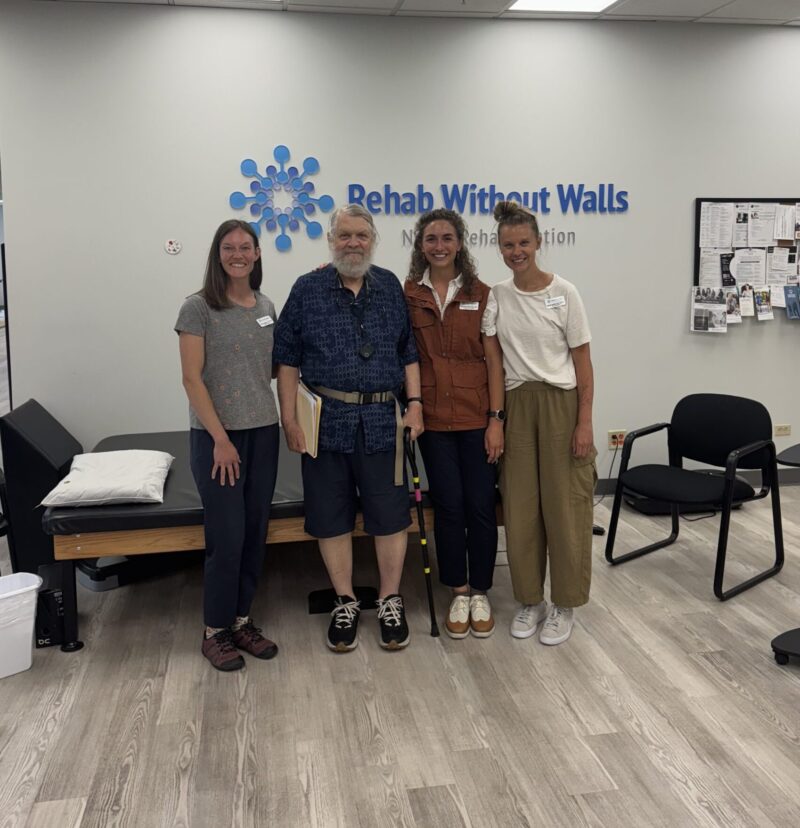
At 78 years old, Phil C. was diagnosed with peripheral neuropathy and moderate dementia in March 2024. He had been experiencing leg pains and walking issues for years and was diagnosed with suspected spine issues. Phil states his memory and cognitive functions were rapidly decreasing to where he felt despondent and demoralized.
Most people don’t recognize dementia and cognitive issues in themselves, but Phil did. After months of advocating for himself to receive the correct treatments and going to different specialists and the VA, he was finally diagnosed correctly. The Intermountain Health’s Neurology group advised him to seek treatment with Rehab Without Walls.
Phil’s therapy goals were to maintain his current level of functioning without declining. He began with three different therapies to target certain issues to gain more independence. Speech therapy for dementia improvement with repetitive memorization exercises, increasing cognition remediation through a series of reading/story telling exercises, and awareness practices. Physical therapy for strengthening to lessen neuropathy symptoms by improving strength, balance, and flexibility, mitigating degradation in all four limbs. Finally, occupational therapy to improve management of medication, exercise, environmental safety – for falls, walking safety, and daily in-house routines.
Before starting with the “RWW experience”, as he calls it, Phil could barely walk and had difficulty with simple daily tasks. Peripheral neuropathy often results in loss of many physical abilities: walking, moving around the house, deceased social skills, or reduced hand and arm movement.
Canes, walkers, and sometimes wheelchairs were what he calls his “daily accessories”. The program’s occupational and physical therapies resulted in a much better physical condition by exercising, stretching, and developing personal safety skills. Mitigating stiff limbs, avoiding falls and accidents, and using proper safety equipment. Phil says his gait, distance walked daily, flexibility, and overall strength are markedly better.
Phil’s mind was very fuzzy and foggy to where he repeatedly asked his spouse the same questions, and his cognition was poor and worsening. The speech therapists worked with him to develop exercises/techniques to remember names, telephone numbers, and other cognitive actions to improve functionalities needed for an active and good life. Selecting and reading short articles, memorizing, and then describing the content to a therapist stimulates one’s cognitive and memory skills. Finally, Phil says, he understood the plasticity concepts of the brain and their benefits as it worked spectacularly for him and the benefits appears to be holding steady.
Phil goes on to say, “For both dementia and neuropathy, the VA, private neurologists, and specialty therapists at Rehab Without Walls stated that the body is a system. So better physical and mental health, and improved diets affect dementia, neuropathy, and even diabetes patients. The program strives to maintain and/or improve overall function. When I began therapy, I had little confidence I would improve in all areas, but overtime saw my progress slowly but steadily improve. This program has greatly improved my quality of life!”

